

At a glance
Good to now
And to make sure you are perfectly equipped for all winter adventures, we have put together a practical packing list for your ski vacation.
Snowshoeing: Equipment Tips
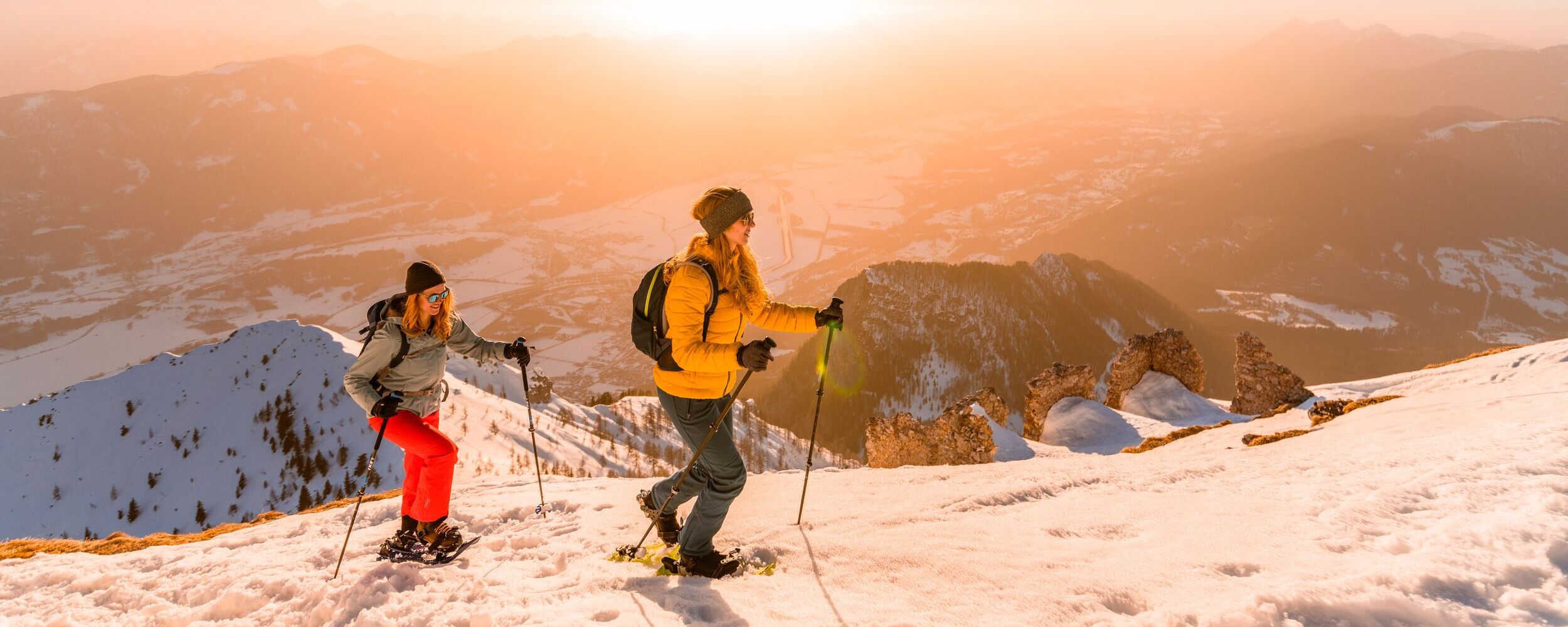
With the right equipment, snowshoeing is a winter sport for nature-loving individualists! Enjoy the beauty of the white winter splendor away from busy pistes and well-trodden paths. Suitable footwear, the right clothing and equipment are essential. What equipment do you need for snowshoeing? How can you recognize good snowshoes? How do you dress properly? How do you best prepare for the tour? We give you tips for even more fun and safety!
How to find the perfect boot for Snowshoeing
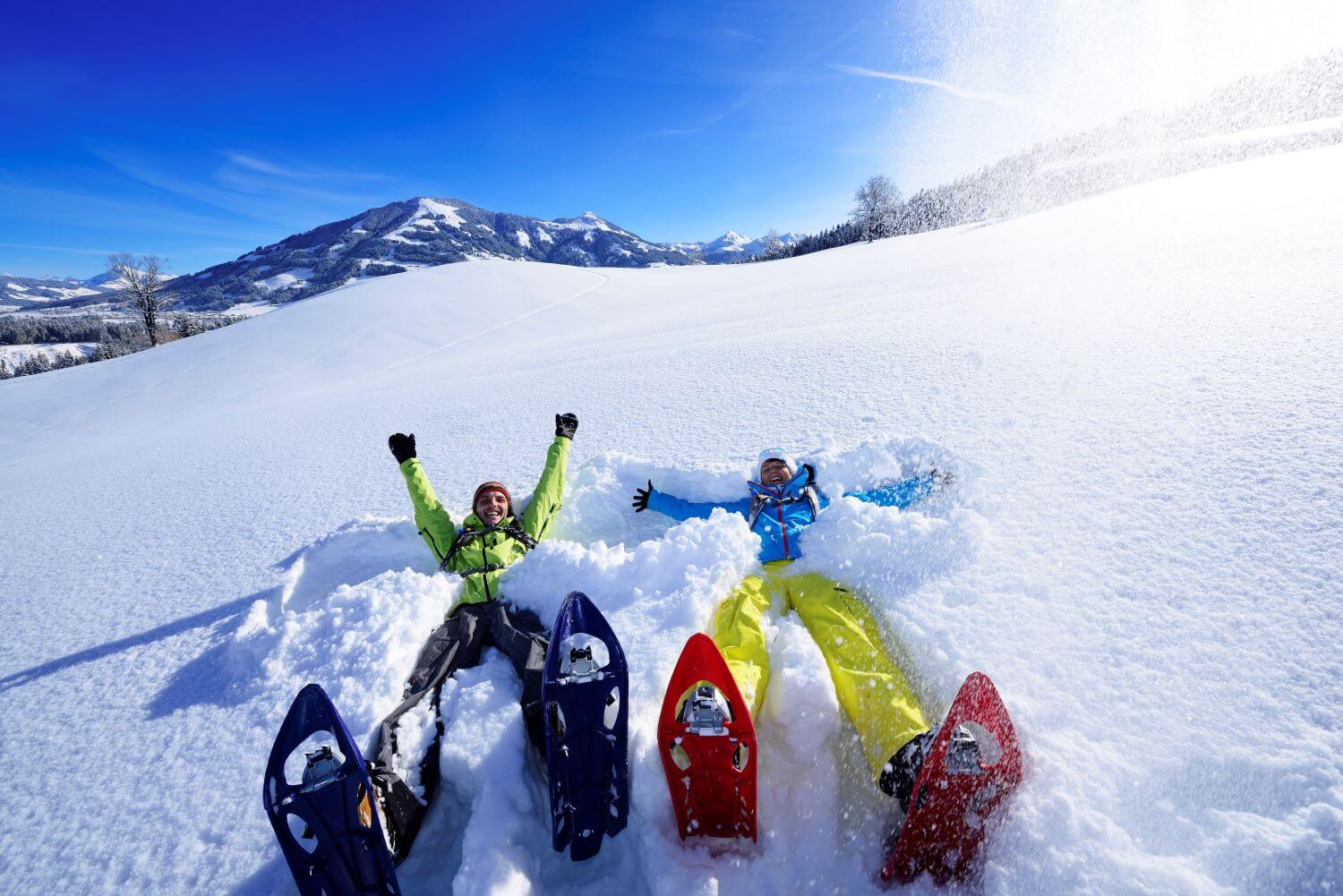
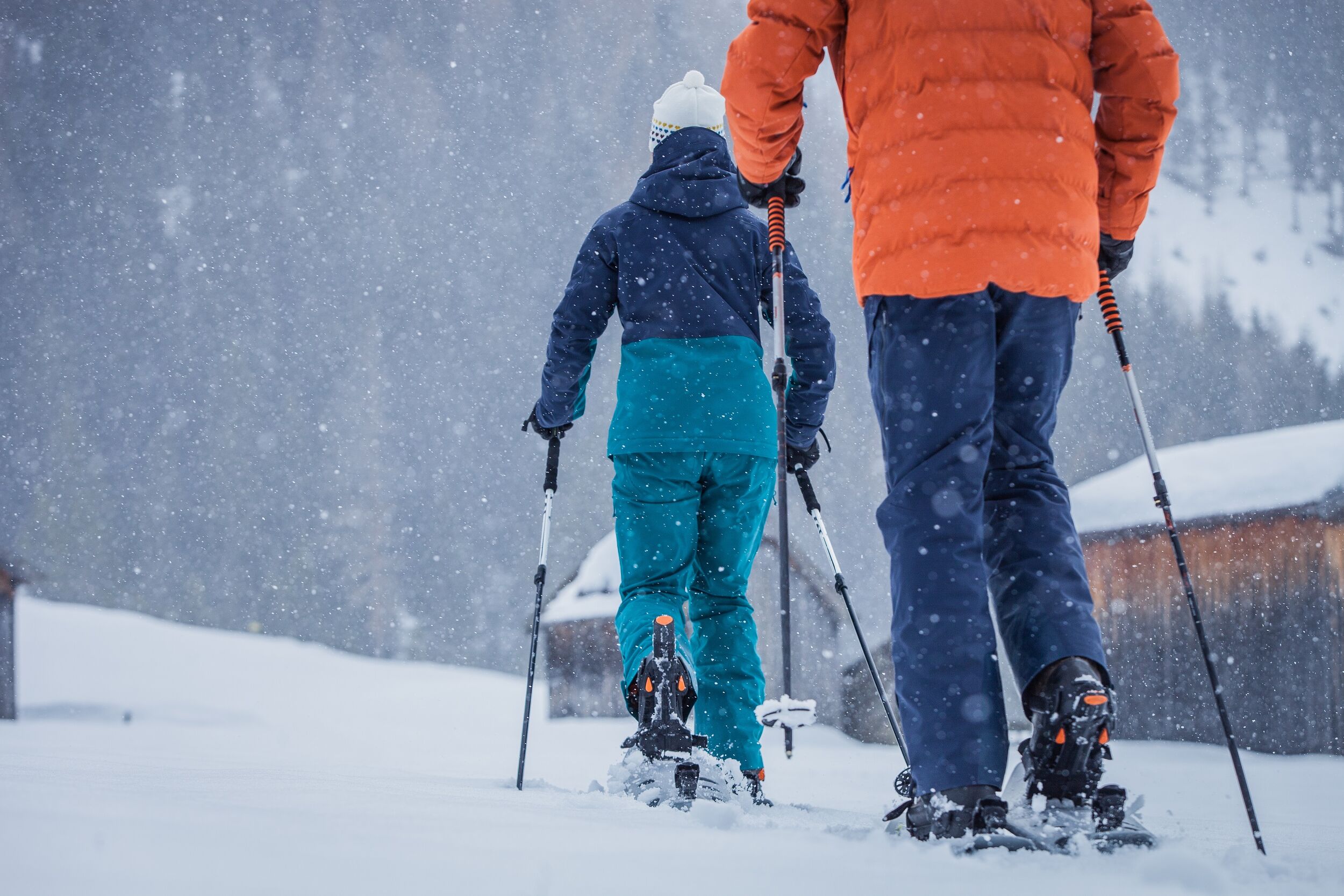
You may have already asked yourself why you need special snowshoes at all. It's simple: snowshoes distribute your weight over a larger area. Without snowshoes, you would sink far too deeply into the white mass, especially in fresh powder snow, making progress difficult or impossible. Snowshoes are comparable to skis. They are strapped under the actual boots. You usually slip into them with the toe of the boot and tighten the straps and loops at the sides and back. There are now a variety of different models to suit different requirements. If you want to try out winter sports for the first time, you can start by renting snow boots.
It depends on the Environmental conditions
If you have taken a liking to this sport, which is as decelerated as it is challenging, it is important to consider where exactly you would like to practice snowshoeing before choosing a model: in areas with little incline and on groomed slopes? Then, for example, snowshoes in the aluminum version are suitable. Or do you prefer mountainous terrain in natural deep snow? Then synthetic snowshoes are often more suitable as they are lighter.
Also make sure that the snowshoe has many spikes in mountainous terrain, preferably all around or in the entire frame. This will give you more traction when the going gets steeper. Some snowshoes also have a fold-out "climbing aid" on the heel to make it easier to climb uphill.
Functional clothing for Snowshoeing - keeping you Warm and Comfortable
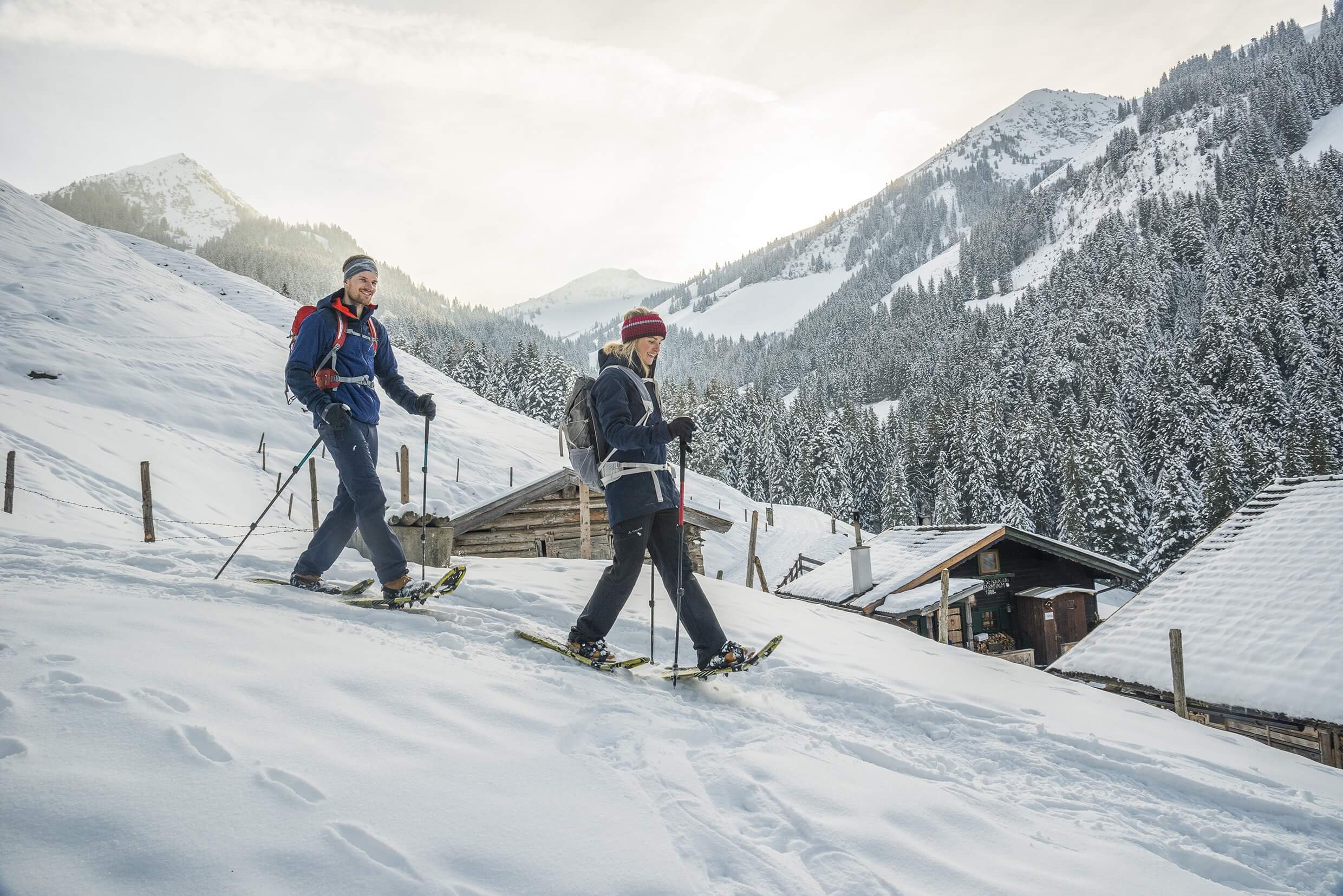
Warm, flexible and with plenty of freedom of movement: this is what the ideal sportswear for snowshoeing looks like. On the one hand, it is important to protect yourself from the harsh winter elements, but on the other hand, you will start sweating after a short time due to the sporting activity. With clothing based on the onion-shell principle, also known as layering, you are always on the right track. This allows you to take layers off or put them on again as required. Snug, warm and breathable underwear is the basis for feeling comfortable. You can use thermal/ski underwear or functional underwear, for example. Pack a second pair to change into if you start sweating a lot, as the combination of "cold on the outside and wet on the inside" should be avoided at all costs. A sports bra and hiking socks are also recommended. If your winter boots are not high enough, gaiters can also be helpful to keep your feet dry and prevent snow from getting into your shoes.
Several Layers, plenty of Freedom of Movement
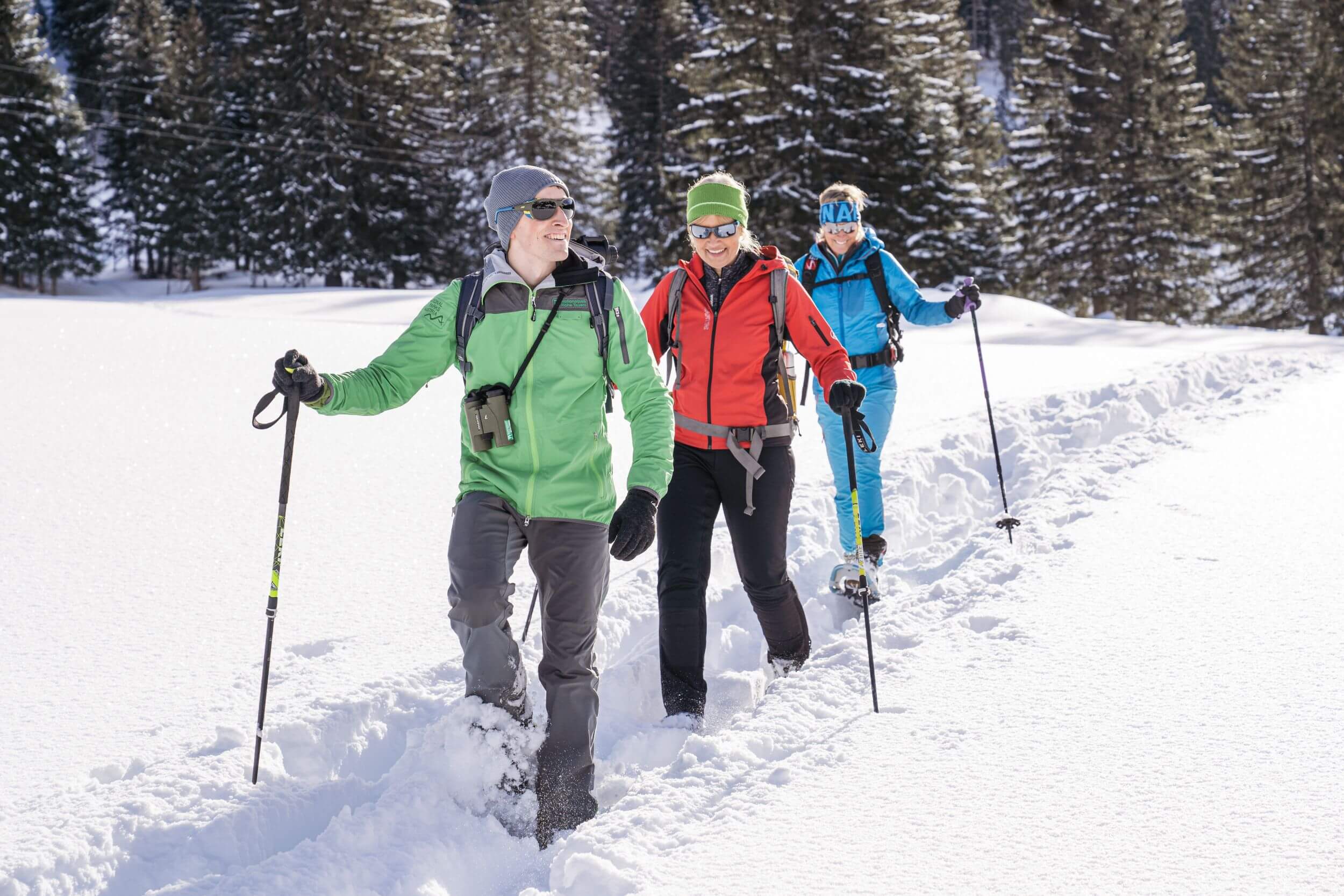
Long underpants or thermal leggings keep your legs nice and warm, whereas classic ski trousers are less suitable for snowshoeing. It usually gets too hot or the material is too bulky. Bear in mind that the size of the snowshoes means that you will have to walk a little wider when snowshoeing and will sometimes have to negotiate inclines. You need the necessary legroom and freedom of movement. Classic winter hiking trousers, such as softshell trousers made of waterproof and windproof material, guarantee you warmth and flexibility at the same time. On the upper body, functional shirts or longsleeves form the next layer over your underwear. Here too, it is advisable to pack a second shirt to change into.
This is followed by a thicker layer such as a knitted sweater and a fleece jacket. Depending on the weather or temperature, you can now put on a winter softshell jacket or down jacket. Don't forget your scarf, gloves and hat! Even though you may take them off as you get more active, you should at least always carry these warming accessories with you in your rucksack. Better safe than sorry, even if the weather changes.
Snowshoe hiking - additional equipment such as poles, rucksack and co.
There are many other items of equipment that make snowshoeing even more enjoyable. These include:
- Hiking poles: They give beginners in particular more support and safety. They also help you to push off, which makes snowshoeing easier. Conventional hiking poles, ideally with wider plates, are suitable. This prevents sinking in the snow.
- Winter rucksack: You need more equipment in winter than in summer, if only for a change of clothes. If your hiking rucksack is not big enough and is also not water-repellent, you will have more fun with a winter rucksack for your skiing holiday. A rain cover can also be useful. There are now even special snowshoe backpacks on offer in which you can stow your snowshoes. However, this only makes sense for multi-day tours or if you want to combine snowshoeing with other sports such as skiing or cross-country skiing.
- Sunglasses: The mirror reflections of the snow are a great strain on the eyes. It is therefore better to wear sunglasses or tinted ski goggles when snowshoeing.
- Sun cream: The combination of high-altitude sun and light reflection has given many a winter sports enthusiast a serious sunburn. Sun cream should therefore be in every rucksack, as well as a lip balm with a sun protection factor.
Other useful helpers for on the go
- Food and drinks: Snowshoeing makes you hungry and thirsty! A healthy snack will help. Pack a lunch box with plenty of provisions, such as muesli/energy bars, fruit, sandwiches, nuts, glucose, etc. Snowshoeing is more strenuous than hiking. If you manage the same distance in summer, you will also manage it in winter, but you will need more time. It will therefore take a little longer to reach the next mountain hut and the associated refreshments.
- Insulated bottle/drinking bottle: Warming drinks such as tea or coffee are a real blessing when snowshoeing. But water doesn't want to be ice cold either. It is therefore best to fill your drinks in insulated bottles.
- Lighter and pocket knife: are always useful when you're out and about.
- Torch or headlamp: As darkness can fall suddenly in winter, you are always well advised to carry one with you.
- Waste bags keep nature and your rucksack clean.
Safe snowshoeing with emergency equipment and correct behavior in the terrain
Snowshoeing is idyllic and a wonderful, slow-paced winter sport. However, as always when you are off the beaten track in mountainous terrain, there is a risk of avalanches. Changes in the weather, falls, sudden darkness: experienced snowshoe professionals attach great importance to appropriate preparation.
- First aid kit with emergency first-aid kit, consisting of a rescue blanket, compresses, (blister) plasters, tapes, ointment, disinfectant, etc.
- Emergency equipment with avalanche shovel, avalanche probe, avalanche protection device with beeper
- Repair kit
- Mobile phone, possibly GPS watch and/or compass, hiking map, binoculars, charging cable, power bank and batteries, equipment for retrieving avalanche warnings
In addition to the emergency equipment mentioned above, the correct behavior in the terrain is particularly important. Pay attention to nature reserves, do not hike through the undergrowth, inform yourself about the route and let the animals have their space. In winter, they have to conserve their energy, so every startle and escape costs unnecessary energy, which can even be life-threatening. What's more, packs of animals can also trigger avalanches, so it's important to keep your distance for safety reasons alone.
The right introduction for beginners
For beginners to snowshoe hiking, a guided tour is recommended. This will give you more confidence and you will also receive tips on how to improve your walking technique on ascents and descents. Hiking in a group is easier, especially on unprepared paths. Those who go ahead lead the way for the hikers behind; in this case, the tour guides take on this task. Even if you are not taking part in a guided tour, you should always be accompanied and avoid setting off alone. If you follow all these tips, nothing will stand in the way of an unforgettable snowshoe hike through the white winter wonderland. Tour providers such as ski schools, the local tourist information office or tour guides will be happy to advise you. The ALPS RESORTS staff at your accommodation will also be happy to help you.
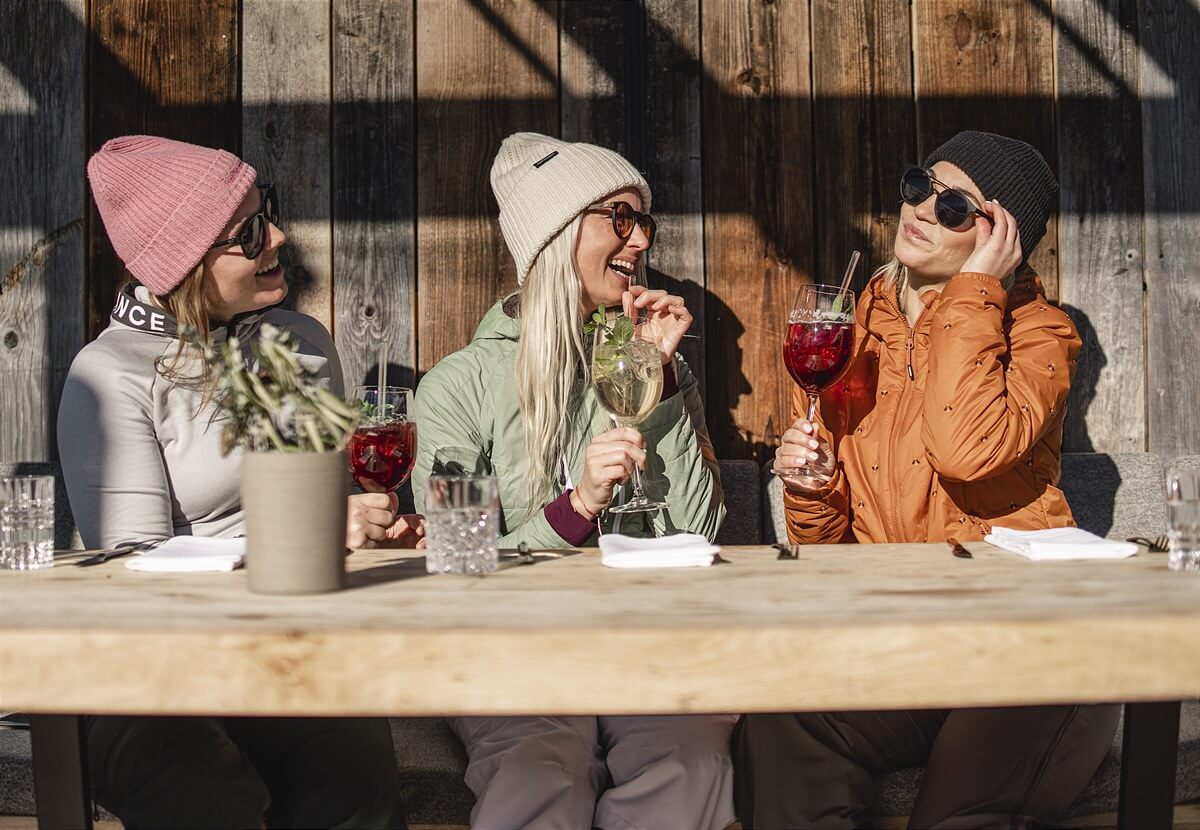
PS: And don't forget to take breaks. Preferably with your tour group, in the sunshine and with a drink.
FAQs: Frequently asked questions about equipment for snowshoeing
When choosing a snowshoe, it is not the actual shoe size that matters. The decisive factor is the width of the snowshoe, which depends on your body weight. The heavier you are, the wider the snowshoe should be to distribute your weight and prevent you from sinking in. Recommendations are as follows: Up to 70 kg body weight, snowshoe size 22 is suitable, from 70 - 100 kg size 25 fits, while snowshoe size 30 is indicated for over 100 kg body weight. Some manufacturers also differentiate between men's and women's models.
The terrain on which you are traveling is decisive. On relatively even or even slightly groomed paths, simple snowshoes made of aluminum or plastic are sufficient. For more challenging trails (deep snow), you should opt for high-quality models that are equipped with spikes and a fold-out climbing aid in the heel area. There are also various differences in quality when it comes to the mount.
Depending on the type of equipment, snowshoes cost between € 70.00 - € 400.00. Beginners who want to get a taste of winter sports can hire snowshoes. If you are enthusiastic about this winter sport, you will find numerous providers for the purchase of snowshoes in the winter sports areas. Numerous guest cards, which you can obtain in our ALPS RESORTS, grant you discounts on sports equipment.
Copyright© ALPS RESORTS; Eisele / Heinnorbert; TVB Brixental / TropperKurt; TZA / C. Jorda; FNPHT / N. Pranger; Region Villach – Rossmann

Lisa Gruber
Content Marketing bei ALPS RESORTS
Gen-Z with a penchant for writing and being outdoors. Lisa enjoys discovering hikes and ski resorts for us and offers tips for the perfect vacation.
Would you like to learn more about ALPS RESORTS? Feel free to use our contact form or submit a non-binding inquiry.